
Zapier is the easiest start, Make is the most visual for complex branching, and n8n gives the most control and can be self-hosted. Pick based on your skills and how much you will run.
Zapier: easiest to start
- Huge library of app integrations.
- Simple step-by-step builder, great for non-technical users.
- Cloud-only; pricing is based on tasks you run, which can add up at scale.
Make: visual and flexible
- Drag-and-drop canvas that shows branching clearly.
- Good for multi-step scenarios with routers and filters.
- Cloud-based; pricing is based on operations.
n8n: most control
- Visual canvas with code available when you need it.
- Can be self-hosted for free or used as a paid cloud service.
- Strong AI and agent nodes; popular for complex AI workflows.
- More setup responsibility if you self-host.
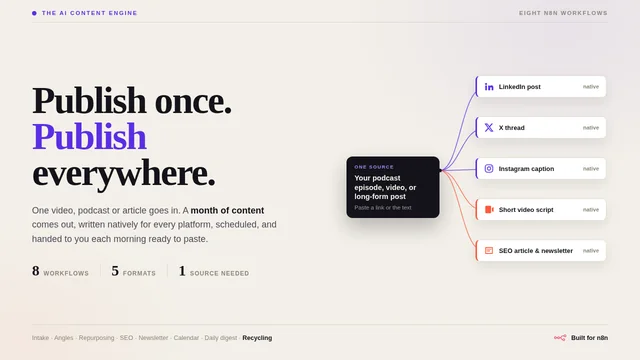
The AI Content Engine
One video, podcast or article in. A month of platform-native content out.
From $89 · Look insideHow to choose
- Just starting and want quick wins: Zapier.
- Complex branching, prefer visual tools: Make.
- High volume, privacy needs or custom AI logic: n8n.
- Check current pricing pages before committing; plans change often.
Start from a working system
The fastest way to learn any platform is to study a well-documented workflow. Our n8n systems — for content, sales and reviews — come fully annotated on the canvas.
Estimate whether an automation is worth it with our Automation ROI Calculator.
Put it into practice
Open the free Automation Time & ROI Calculator: see what automating a task is really worth. This article is part of The AI Agents & Automation Handbook.
Sources & further reading
Product facts were checked against official sources on 16 October 2026. AI tools change quickly, so check the provider’s current documentation for anything you rely on. Our editorial policy.